martedì 30 luglio 2013
Supermercati massonici
I centri commerciali che fanno come corona intorno a Roma sono tutto un tripudio di piramidi e obelischi. Che siano un complotto massonico? Tanto più che furono fortemente stimolati da Veltroni, che - non ne sono sicuro ovviamente - sospetto ricopra un'alto grado della massoneria.

lunedì 29 luglio 2013
Etruscan numerals
The first
ten Etruscan numerals are the following
thu śa
zal senph
ci cezp
huth nurph
mach sar
An
asimmetry is evident. Whereas the first five numbers have clearly no
correspondant in indo-european languages, the last five are more familiar (sar for instance is similar to desa in sanscrit), and are probably
loans. It seems, in other words, that the system of Etruscan had base five, and
that only later it added the numbers from 6 to 10 with loans from the
surrounding countries. This is confirmed by the fact that Latin numbers are
obviously with base five: six is written VI (five and one), seven VII (five and
two), etc. and Latin numbers are certainly of Etruscan origin.
A base five
system can seem primitive, but it allows to count easily up to 25 on your
fingers: it is enough to count the ones on one hand and the fives on the other.
This is not possible with the decimal system, where you have to stop at 10 or
to resort to an
abacus or some other device. This mathematical ingenuity is consistent with the
extraordinary engineering works of the Etruscans – many of the older realizations in Rome are in fact Etruscan, for instance the cloaca maxima.
Caterina va in città
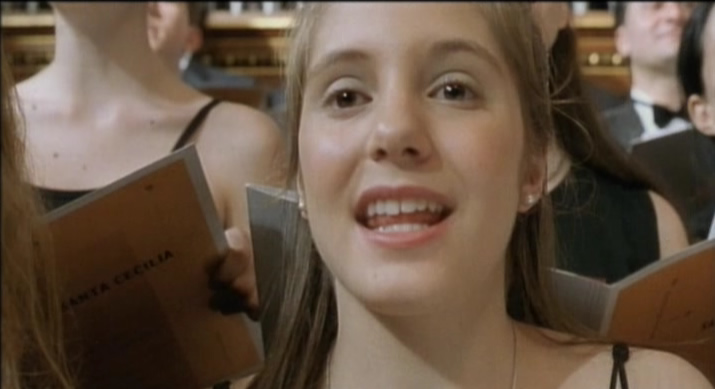
Ho visto in televisione “Caterina va in città” di
Virzì. Il film racconta di una famiglia di paese che si trasferisce a Roma. Il
padre, infantile e con velleità di ascesa sociale, iscrive
la figlia Caterina a un prestigioso liceo del centro. Caterina diventa amica
della figlia di un importante scrittore di sinistra e successivamente della
figlia di un sottosegretario fascista. Il padre spera di realizzare la sua
scalata sociale tramite queste due famiglie ma ovviamente fallisce. Il film vorrebbe essere una fotografia della realtà italiana dei primi anni del berlusconismo, però è confuso e non aiuta a capire. L’Italia è realmente un Paese
estremamente classista, ma temo che gli autori pensino che sia un problema universale,
e non sospettino che l’estrema ingiustizia sociale ed economica italiane sono
un unicum in Europa continentale, e
ci avvicinano invece ai Paesi anglosassoni. Non parlo della Svezia o della
Germania, parlo anche di paesei mediterranei, in cui le disuguaglianze di reddito e di classe sono
molto minori che in Italia. E questo certo è dovuto alle inadeguatezze
della politica, ma soprattutt, ahimé, al fatto che le masse, in larghissima
parte, invece di chiedere diritti – come nel resto d’Europa - hanno chiesto
“aiutini”. Come il padre di Caterina, che conclude, dopo il fallimento della
sua questua, che la società è immodificabile. Come se non esistessero altri e
più efficaci modi per modificarla, come se il film non avesse potuto
concludersi con almeno uno dei tre della famiglia che in un sussulto di
dignità dice ai privilegiati : “ma chi vi vuole”. I ricchi sono ricchi e si
comportano da ricchi, ma non sta scritto da nessuna parte che i poveri debbano
comportarsi da accattoni. Ma anche questa semplice costatazione sembra mancare
al regista.
domenica 28 luglio 2013
Fraternity
When I was
very young. I thought that everybody should have the same income. The principle
is not wrong, but I realized much later that communism is not that all men are
created equal, it is the fraternity of
men. The problem with XX century is precisely that the revolutionaris – with
the exception of Lenin, but he died too soon – mistook the two and tried to realize equality, not fraternity. Since the place where perfect equality is thoroughly realized is neither the
family, nor the community, but the troop, where everybody is equally subjected to an impersonal
power (iultimately danger of death), this explains why many communists have loved so much military organization.
When it appeared that all this didn’t work, the majority believed that the military discipline was too hard, and it had to be softened, with a socialdemocratic astray that evenutally ended in the collapse of
the Soviet Union, on the other side it was thought that there was not enough
discipline, and that it was necessary to motivate people with the thrill of fight, leading to one or the other form of permament revolution. It was an easy play for capitalsim to show his "superiority".
Etruscan

Etruscan is
either cosnidered a language isolate, together with two closely related
languages (Rhaetic and Lemnian) or loosely related to Anatolian Indoeuropean
languages such as Hittite. The relationships with Indoeuropean languages are
many: numerals such as semph (seven)
and numph (nine), words such as lautun (people = populus, Leute, liudi),
and in particular many morphological items such as the genitive in –s, the
locative in –thi. Nonetheless, they are outbumberd by strong discordances: for
instance the words mach (five) and clan (son). In phylogeny, an animal that
shares characteristics of different groups is typical of transitional types.
For instance, Hippopothamus is very different from Cetaceans, even fossil Cetaceans,
and yet has been shown that Artiodactyls, to whom Hippopotamus belongs and
Cetaceans are in fact two grades of the same order Cetarctiodactylans, and
Hippopothamus is exactly the “missing link” between the two (the morphology is
of cow, but it lives in water).
In my
opinion – and this is nothing new, it is for instance more or less the same opinion
of Francisco Vilar in his “the Inodeuropeans and the origin fo Europe” – Indo-European
is a fairly recent and rather
homogeneous branch in a larger family that comprises Anatolian languages and a
number of preindoeuropean languages, among which possibly the Tartessian, the
Pelasgian, possibly the language of hydronims of Northern Europe studied by
Krahe, and appunto the Etruscan. These branches were diverging, with different
morphologies and lexicon, and yet had a common origin in the so called
Nostratic. Possibly also Anatolian languages such as Hittite and Luwian , that
diverge in so many grammatical and lexical ways from the reconstructed Protoindoeuropean,
represent one separete branch of this original radiation. The situation, in
other words, is analogue to Semitic languages, one of the traditional
linguistic families, that has been shown to belong to a larger Afro-Asiatic
familiy that comprises also Berber, Somali etc. The hypothesis of an
agricultural and matriarchal pre Indoeuropean Europe worshipping a Great Mother
– as suggested by Marija Gimbutas - that was replaced by steppe people speaking
Indoeuropean languages would be thus the history of the replacement of older
and newer branches in the same large linguistic family.
Basque,
that has often been related to the languages of Old Europe (pelasgian,
etruscan, etc.), seems instead completely isolated – it is in any way unrelated
to Etruscan.
venerdì 26 luglio 2013
Craving to win
A dear friend of mine, specialist in tropical ecology, referred to me about a conversation with a friend, another ecologist, that ended with the words: "I like to win". Aristoteles said that philosophy arises from amazement; what philosophy can arise from the craving to win? I'm afraid this attitude is by no means restricteed to my firend's friend.
venerdì 19 luglio 2013
Complottismo
Si complotta per concquistare il potere. Se il potere lo si ha già, che si complotta a fare?

sabato 13 luglio 2013
Pasolini televisivo
Paolini aveva chiaramente il dono della profezia, che è esclusivo dei grandi poeti. Peò, stranamentee, le poesie e i romanzi sono tutto sommato orrende e retoriche (anche se non ho letto tutto). Il cinema è bello e drammatico, ma non si può ceto dirre che sia Rossellini. Gli scritti "corsari" sui giornali sono corsari solo perché in Italia dire cose biecamentee reazionarie è vconsiderato fico e anticonformista - siamo inseorabilmente un paese cattolico. Dove ha raggiunto la vera grandezza, paradossalmente, è negli interventi televisivi. Le profezie sono tutte avvenute in televisione, e artisticamente la frammentarietà. la sofisticatezza, la padronanza del linguaggio sono superlativi.
Abdicazione
Non ne sono sicuro, ma credo che l'abdicazione di Benedetto XVI, sotto la spinta dello scandalo suscitato dai casi di pedofilia nella Chiesa, non significhi solamente una mossa audace per salvare la Chiesa stessa, non la rinuncia di un Ratzinger a una carica che non aveva mai amato, ma forse alla fine dello stesso potere temporale della Chiesa, cominciato sostanzialmente con Costantino e il ritorno del papa da erede dell'imperatore a semplice vescovo di Roma - come sottolineato insistentemente sia da Ratzinger che da Bregoglio.
lunedì 8 luglio 2013
Feste romane
Leggendo le recensioni dell'ultimo film di Sorrentino e Toni Servillo non posso fare a meno di pensare che si tratta ne piu ne meno delle orge degli antichi romani ricchi, con la stessa volgarita, eccesso, ma anche con una certa creativita.

martedì 25 giugno 2013
Costi della crisi
Per dirla in due parole, gli Stati Uniti hanno fatto bancarotta, e stanno facendo pagare le spese del risanamento all’Europa. Le misure di austerità, che hanno mandato l’Europa in recessione sarebbero altrimenti del tutto senza senso – per lo meno in un momento di crisi. E gli Stati Uniti sono andati in bancarotta non per la finanza, ma perché non hanno retto il peso delle guerre in Afghanistan e Iraq, di gran lunga le più costose dell’intera storia umana. Mi viene da pensare al re Sole, che dissanguò lo stato francese in una serie di guerre e iniziò una recessione che in ultima analisi diede origine alla Rivoluzione Francese.
mercoledì 19 giugno 2013
Complexity of languages
I am
reading the dazzling book “through the language glass” by Guy Deutscher. The
author states that, although it is possible to compare different languages on
the base of the number of phonemes, the complexity of grammar and syntax, and
the richness of the vocabulary, it is not possible to measure an overall index of language complexity,
because it is not possible to compare, for instance, phonemes and syntax. It is
not possible to compare phonemes and syntax, but the enthropy of phonemes and
the enthropy of syntax can be compared. In ecology this is currently done: the
number of a species in a habitat and the number of habitats in a region are
very different things, but it is possible to calculate the enthropy of the
former (alfa-diversity) and the latter (beta-diversity) and to sum these
enthropy to obtain an overall measure of diversity of the landscape. Perhaps it
is possible to sum the enthropy of phonemes, grammar, syntax and vocabulary and
obtain a global measure of complexity.
venerdì 14 giugno 2013
Machiavellici e machiavelliani
Il Principe, in due parole. dice: “Magnifico Lorenzo, smettila di fare inciuci e comincia a combattere!”. A combattere servono le virtù della volpe e del leone, e la politica è una forma di guerra incruenta che talora sfocia in quella cruenta (come dicevo in un altro post http://castorphans.blogspot.it/2013/05/machiavellismo.html). Lorenzo, e con lui i molti machiavellisti italiani, vedono la politica come arte di corte, basata sull’intrigo, l’inganno, l’adulazione, gli inciuci appunto, e credono di trovare giustificazione teorica in uno scritto che è rivolto contro di loro.
La politica infatti non è immorale, la sua moralità è basata sul diritto e dovere di difendere la propria comunità (richiamato nell'articolo 52 della Costituzione italiana), e questo ricollega due testi apparentemente così diversi come il Principe e i Discorsi.
martedì 28 maggio 2013
Machiavellismo
Machiavelli bene o male è uno dei padri del pensiero laico, in un Paese, l'Italia, in cui i laci sono pochissimi. Il principe è fondamentalmente un appello a Lorenzo il Magnifico per unificare l'Italia. Mi sembra però che anche i più vicini al sentire di Machiavelli - che era repubblicano e patriota - forse non lo capiscano pienamente. Si dice che per Machiavelli la politica debba seguire una morale diversa da quella corrente, ma qual è questa morale? Spesso si dimentica che tutta la prima parte del "Principe" è una critica degli esereciti mercenari e una difesa dell'esercito di leva. E in questa parte sta il vero senso teorico del "Principe": la politica è guerra. In guerra non tutto è pemesso, anche se la morale di guerra (e i codici di guerra) sono diversi da quelli di pace: le atrocità non sono ammesse neanche se portano alla vittoria, è permessa la frode ma non la slealtà, i nemici si possono uccidere ma ogni combattente deve essere rispettato, ecc. L'idea in realtà non è nuova: un re è legittimo o per eredità, o perché ha conquistato un regno in guerra. Non a caso a Napoleone sconfitto a Waterloo venne lasciato il regno dell'Elba - un po' era uno sberleffo, un po' nasceva dal fatto che ormia il titolo di re se l'era conquistato per diritto di guerra.
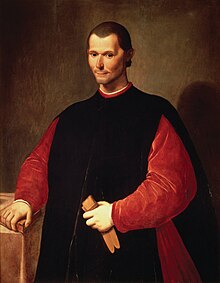
La novità - immensa - è che se abbiamo diversi attori in guerra, possiamo studiare scientificamente le leggi che portano al prevalere di una parte o dell'altra, cosa che non sarebbe possibile se il potere discendesse da dio come sosteneva San Paolo o se avesse una legittimazione morale.
Personalmente penso che non solo la guerra debba essere superata, ma che in fondo lo sia già stata. Machiavelli resta un faro, ma servirebbe un nuovo Machiavelli che ci insegnasse quali sono le leggi della politica in un regime di pace. Le leggi della guerra spesso erano dure, ma erano leggi del cambiamento. Abbiamo molta giurisprudenza, molti principi, ma nessuno che ci permetta di gestire il cambiamento in tempo di pace.
giovedì 23 maggio 2013
Wallace

Iscriviti a:
Post (Atom)