giovedì 2 maggio 2013

Fascism and rationalism

Fascist architecture and rationalist architecture look alike - they developed after all more or less in the same years. Anyway this resemblance is very superficial. In fact the architecture of Le Corbuser, Gropius, Mies van der Rohe is rational not or not only because it employs simple shapes with no decoration - parallelepipeds, cubes - but above all because it is functional  - buildings should be "machines for living".


But fascists building are all but machines for living. They must impress and terrify, not be friendly. Huge staircaases, disproportionate volumes, a tendence to be higher than large. The style is the same - blocks, rows of frameless windows - but the meaning is opposite.


Of course, this doesn't mean that a few examples fo this architecture can be aesthetically pleasnt - for instance the "Palazzo della civiltà del lavoro" that is discussed in another post (http://castorphans.blogspot.it/2011/03/colosseo-quadrato.html) or the astounding "Casa del Fascio" in Como.


sabato 27 aprile 2013

Trotzkismo eterno

Se ci sono tre partiti, A B C, ognuno con circa un terzo dei seggi in parlamento, e il partito C detesta A e B ed esclude di allearsi con uno dei due, cosa succederà? Che A e B si alleeranno contro C. A quel punto, se non è in grado di far sciogliere il parlamento e andare a nuove elezioni, inutile che C frigni. Gli avversari vanno divisi, non fatti coalizzare, ma questo chiaramente presuppone che uno abbia veramente voglia di lottare e non di fare la bella statuina.

lunedì 22 aprile 2013

Napolitano bis

Grillo ha fatto finta di essere contro l"'inciucio", ma in realtà auspicava esattamente questo. Alle prossime elezioni ci sarà un'emorragia di voti dal PD a 5stelle. Le conseguenze per la vita delle persone (soprattutto dei suoi elettori) che deriveranno da questa intesa non gli interressano. Certo, è stato abilissimo, cosa che non si può dire del PD.

venerdì 22 marzo 2013

Fall

The authors of II century d.C., observing the rise of Christian religion, considered this faith as a "superstition", an were puzzled by the strange beliefs of christians, that challenged the humanism and the rationalism of their civilization. They were unaware that the Roman Empire would fall in a couple of centuries and that the absurd doctrine will become the indubitable religion for every European. I ponder over these old stories when I browse the web. There you find a large variety of things, but the dominant ones are political conspiracy, UFO, alternative economic theories, crop circles and so on. They appear as something absurd and illogical to the people that received a traditional education based on books (like me), but they seem to establish a coherent doctrine, based more on faith that on rational reasoning - not differently from the early Christina religion. In the Reinessance a synthesis between the humanism of the ancients and christian religion was realized . But this happened 1000 year after the collapse ot the ancient civilization.

venerdì 15 marzo 2013

Habemus papam

The episode of the dream of Pope Innoncence III - the subject of one of the frescos in the Church of the Saint in Assisi - is well known. The pope dreamed that the Lateran - the official residence of the Bishop of Rome - was ruining and that Francesco sustained it. The reference to this history is obvious in the choice of the name of the new pope, considering that the recent case sof pedophile priests that, remarkably, scandalised in particular the USA catholics. The scandal is probably not unrelated with the abidcation of Ratzinger.
Many sites in the web underscore the ambiguous relationship of Bregoglio with the dictatorship in Argentina, other the conservatism with respect to gay rights; other emphasize the choice of poverty and the care for social problems. In other words, nobody knowns if he is progressive or conservative - not surprisingly. he is a Jesuit.

mercoledì 13 marzo 2013

Italia giusta

Lo slogan di Bersani era "l'Italia giusta". Purtroppo è un ossimoro.

giovedì 7 marzo 2013

Fecerunt desertum

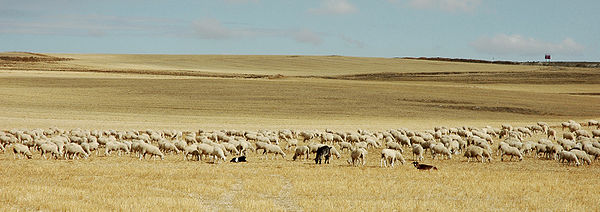
If you travel inner Sicily or Spain you will find a barren landscape, with sparse or no trees and extensive grasslands. This is ovioulsy related to low rainfall, but this landscape is by no means a natural one; it was originated by overexploitation of the soils for crop harvesting at the time of the Romans. The impoverished soils became unproductive, and were ledt abandoned or destinated to sheep grazing. This is perhaps the most striking heritage of the Roma Empire, much more, possibly, than the imposing ruins of temples and theaters.
And our own civilization probably will leave a simila footprint: the towns and skyscrapers will become sparse heaps of rubbles, but the irreversibly collapsed ecosystem - for instance the desertified rainforests - will remain forever.

lunedì 4 marzo 2013

Comici

In fondo le elezioni le hanno vinte due comici.

Lucio Dalla

In fondo come cantautore non era un granché. Però un mio amico innamorato del jazz lo venera, e infatti se lo si vede come jazzista, era un grandissimo.

mercoledì 27 febbraio 2013

Disaster

In many ways we must thank Frau Merkel for the disaster of the recent elections in Italy. A yer ago, the left would have won the election easily and definitively, but the leaders of the left feared to receive the same treatment as Greece, where the socialist denounced the huge budget hole left by the previous right governemnt, and were left collapse by the EU authorities.

giovedì 21 febbraio 2013

Work ethic

I was reading the interesting post about working in academia (http://evol-eco.blogspot.it/2013/02/academic-ambivalence-why-do-we-want-to.html) that plainted that positions are few, and work is very hard, almost masochistic. But this is not a problem of Academia, it is a problem of America. It was highlighted by Max Weber: ascetic protestantism, the belief that hard work will give yout Heaven, is deeply embodied in the anglo-saxon variety of capitalism. It is a religious belief, it has nothing to do with economic efficiency; in fact Germany has a higher pro-capita productivity than America, notwithstanding the fact that in Germany workers work less and the atmosphere is much more relaxed.

mercoledì 20 febbraio 2013

Arco parlamentare

L’arco politico italiano sia prima sia dopo tangentopoli andava dalla sinistra radicale allla destra più o meno neofascista. Il centro dell’arco parlametnare era occupato dai piccoli partiti eredi della DC. Questo è stato vero fino alle elezioni del 2007, in cui Veltroni ha dissolto la sinistra cosiddetta radicale – che è radicale all’incirca quanto i socialisti francesi o i socialdemocratici tedeschi – cosicché l’arco parlamentare si è spostato bruscamente a destra, andando dal centrosinistra del Pd fino alla destra, con Berlusconi che si trova quindi al centro dell’arco parlamentare – e quindi in una posizione estremamente favorevole dal punto di vista elettorale. L’operazione del Pd è dovuta alla ricerca dell’alleanza con l’UDC, che poi è avvenuta con il governo Monti. Scelta politica del tutto legittima, ma che, a pensarci bene, non richiede che si elimini la sinistra; l’eliminazione della sinsitra è avvenuta perché il Pd non tollera di essere “scavalcato” a sinistra; in altre parole, il Pd vuole fare il partito di centro (la sinistra del centro), ma non ha il coraggio di dirlo, non perché perderebbe voti, ma perché essere di centro è meno glamour che essere di sinistra.

Industria

Sono venuto a sapere che l'Italia ha raggiunto gli obiettivi di Kyoto di una sensibile riduzione delle emissioni di gas serra. Potrebbe essere una buona notizia, ma ha un risvolto preoccupante: non è stato raggiunto con l'efficienza energetica e le energie alternative, ma principalmente perché, tra crisi e delocalizzazioni, negli ultimi venti anni praticamente abbiamo perso la nostra economia. Vedi cosa succede a mettere in mano il Paese a un industriale?

mercoledì 6 febbraio 2013

Machiavelli cristiano II

Un commento al post precedente; bisogna guardare alle mani invece che agli occhi perché gli occhi possono mentire ma le mani no. Questo non contraddice il resto del discoro.

venerdì 25 gennaio 2013

Machiavelli cristiano

Machiavelli diceva di guardare alle mani, non agli occhi, ovvero alle opere, non le intenzioni. Il vangelo dice lo stesso: gli alberi si giudicano dai frutti. Machiavelli di solito viene interpretato con il fine che giustifica i mezzi; ma chi interpreterebbe così il vangelo? Il senso in realtà è di guardare non alle azioni, ma alle conseguenze delle azìoni - esattamente quella che Weber chiamava etica della responsabilità.