Il grande animatore Miyazaki si è scagliato contro le immagini realizzate con l'intelligenza artificiale. In prima istanza mi sentirei di condividere questa posizione ma ricordo che alla fine del XIX secolo l'arte andò incontro a una crisi mortale a causa della nascita della fotografia, crisi a cui rispose prima l'impressionismo cercando di imitare l'effetto fotografico e poi l'arte moderna da Picasso a Duchamp in modo ancora più radicale, abbandonando la mimesi stessa. Se l'arte moderna manca della perizia tecnica imitativa (apparentemente) dell'arte classica è perché la mimesi aristotelica è realizzata in modo molto più perfetto dalla fotografia. L'arte moderna e poi quella contemporanea hanno scelto altre strade che talora reinventano la mimesi classica ma che comunque privilegiano il momento espressivo su quello imitativo
Visualizzazione post con etichetta contemporary art. Mostra tutti i post
Visualizzazione post con etichetta contemporary art. Mostra tutti i post
venerdì 23 dicembre 2022

sabato 30 gennaio 2021
Poesia
nessuno sa bene cosa siano arte e poesia, però De Chirico ci suggerisce che consisterebbero nel far vedere quello che non si vede.
mercoledì 30 dicembre 2020
Sgarbi arte contemporanea e arte antica
Questo
video mi ha colpito, prima di tutto perché Sgarbi dice quello che pensa e non quello che fa comodo al suo padrone (e la cosa assurda è che il padrone se lo sceglie per divertimento e non percHé faccia parte di una cordata politica). secondo poi perché afferma un concetto che ho ripetutto tante volte in questo blogghetto, cioè che ci sono fortissime somiglianze tra l'arte del '900 e l'arte del Rinascimento. Però il discorso di Sgarbi ancorché giusto è un po' superficiale - certamente l'arte è al di là del tempo, ma le somiglianze che si vedono tra Antonello e Fontana non le vedi tra Tintoretto e Fontana - il Rinascimento assomiglia così profondamente al secolo scorso perché anch0esso è stato un secolo di ultravanguardia.
sabato 25 aprile 2020
Realism in contemporary art
It is not true that the art of XX century abandoned realism. The 12 horses of Iannis Kounellis are more realistc than a horse paintend on canvas (in fact they are the actual horses). The artists of modern and contemporary art are in search of the truth exactly as Rafael, Tiziano and Caravaggio. What these artists abandoned is the search for beauty:
In the 19th century the aim of painting was no more truth but bueaty, This was completely reversed in 20th century.
In the 19th century the aim of painting was no more truth but bueaty, This was completely reversed in 20th century.
domenica 10 giugno 2018
Futurismo
Il futurismo stra profondamente nelle corde dell'arte italiana - chissà percjé. Solo che curiosamente mentre la versione dell'inizio del XX secolo già si vedeva dove sarebbe andata a finire (nel fascismo), quella ripresa negli anni '70 (Schifano, Matia Bazar, Dalla o meglio il suo poeta) è stata radicalmente e rivoluzionariamente di sinistra.
martedì 5 settembre 2017
Capodimonte, concettuale
Sono recentemente stato al museo di Capocimonte di Napoli, che ha tra le sue più peculiari caratteristiche una piccola ma eccellente sezione contemporanea. E come spiegato dallo stesso museo, c'è una perfetta continuità tra le collezioni antiche e quelle del '900. Prendiamo per esempio questo Sanr'Andrea. La croce rossa, assolutamente irreale, non ha nulla di realistico, ma è concettuale anche più che un'opera di Pistoletto o Kosuth.


sabato 4 febbraio 2017
Geniuses are stealers
Picasso said that good artist copy but geniuses steal. The reason is that cubism was not invented by him, but by African artistis. The "demoiselles d'Avignon" pays hommage to Africa in the ugly mask on the right (in fact it is unvolountarily a short hisotry of African art, from the striking realism of Ife and Nok cultures to the almost abstract art of Yoruba)

But Picasso was too modest (as often geniuses are): 1) first of all, everybody thought that African masks and statues were little more than the horrid attempts of half-monkeys (realistc figures were still unknown); only a genius like Picasso could understand the sophistication and conciousness of African art 2) Picasso at least did a work of translation of African art into Western canons. In particular, African artist make no preparatory drawings, whereas "les demoiselles d'Avignon" was carefully prepared and is obviously the product of a sublime master of drawing

But Picasso was too modest (as often geniuses are): 1) first of all, everybody thought that African masks and statues were little more than the horrid attempts of half-monkeys (realistc figures were still unknown); only a genius like Picasso could understand the sophistication and conciousness of African art 2) Picasso at least did a work of translation of African art into Western canons. In particular, African artist make no preparatory drawings, whereas "les demoiselles d'Avignon" was carefully prepared and is obviously the product of a sublime master of drawing
martedì 10 maggio 2016
Cerco un centro di gravità permanente
"Cerco un centro di Gravità Permanente" di Battiato è un po' come le "Demoiselle d'Avignon": spiega in modo estremamente chiaro (per chi sa guardarlo) tutto quello che farà dopo.
venerdì 6 novembre 2015
Muccino e Pasolini
Umberto Eco una volta disse che si può anche dire che Dante era un cattivo poeta, ma solo dopo 50 pagine di fitta analisi testuale. Il problema di Muccino che critica Pasolini perché non ha tecnica cinematografica non è tanto un mediocre che critica un gigante, quanto che non c'è argomentazione, come nelle chiacchere da bar. Tra l'altro, è abbastanza divertente che non si sia accorto che il carattere naif della tecnica cinematografica di Pasolini, assai evidente, rientra pienamente nello stile delle ricerca artistiche di avanguardia del secondo dopoguerra, che disprezzano la tecnica, da Duchamp al punk.
sabato 17 ottobre 2015
Cucina, avanguardie artistiche e estetizzazione della vita
In Italia, la centralità ,per non dire l'ossessione, del cibo non è certo nuova, però recente è la divizzazione degli chef, che sono diventate delle vere star. In parte è una moda, in parte è segno del raggiunto benessere (tanti che una volta si potevano permettere al massimo pane e mortadella oggi possono togliersi lo sfizio di un buon risotrante), però in parte è un fenomeno più profondo e generale, quello dell'estetizzazione della vita. Fare della vita un'opera d'arte, idea nata nel XIX secolo, è forse il motivo conduttore di tutta l'arte moderna, dagli arts and crafts al Bauhaus alla Soziale Plastik di Beuys. E il programma, sperimentato dalle avanguardie, ha avuto uno straordinario successo. Siamo circondati da oggetti materiali e immateriali (per esempio i video) informati dalla ricerche estetiche delle avanguardie. Il cinema per esempio è stato profondamente influenzato dal cubismo. E la cucina non fa eccezione.


sabato 27 giugno 2015
Contemporary art in Rome, where it is and where it is not (at MAXXI)
If you want to seecontemporary art in Rome, don't go in the official institutions, MAXXI and MACRO and the rare exhibitions. The only places in Rome where you find contemporary art (apart from a few outstanding examples of street art) are underground realities, in particular Forte Prenestino and MAAM (Metropoliz), both on the road Prenestina. Forte Prenestino hosts true treasures, for instance the graffiti of Blue, and I suspect that a rich collectionist would crave such pieces of art. MAAM has more amateurish pieces (with notable exceptions), but it represents something unique: it is not a collection of works, but a collective work, where single pieces are only elements of a whole. The Galleria Borghese has some similarity, since its countless masterpieces are connected in a sort of Gesamtkunstwerk.


martedì 27 gennaio 2015
Passepartout
Passepartout aveva molti livelli di lettura, ma proprio per questo veniva capito da tutti, dal più sofisticato al più semplice. Gli unici che non ci capivano niente erano i dirigenti raccomandati della RAI che infatti l'hanno chiuso.
P.S.Contrary to a common opinion i raccomandati abbondano anche a Mediaset e nel privato tutto.

P.S.Contrary to a common opinion i raccomandati abbondano anche a Mediaset e nel privato tutto.
giovedì 2 ottobre 2014
Francis Bacon (the ancient master of the moderns)
Francis Bacon is an autodidact. He learned to paint studying the ancient masters, whose techniques he master wonderfylly, and this is probably a his biggest strenght, since he is fully contemporary and yet he paints like an ancient.


giovedì 25 settembre 2014
MAAM-MAXXI
When Walter
Veltroni created the MAXXI, he watned to create the Roamn ewuivalent of the
Beaugourg. The operation failed, not only because, after having spent billions
to build the building,. They had no more money to buy the art to put into the
container, but mainly because museum of modern art are daramatically different
from museum of classic art. Museum of classic art are collections, with the
objective of displaying the history of art, of simply for the amusement of the
visitors. A museum of contemporary art is mainly a place wher the artistic
world meets – artists but also critics, collectionists, the public.And nobody
meets in the MAXXI, apart from families with little children.
The failure
of the MAXXI was the first idea that catched my mind when I visited the MAAM, a
strange museum in a squat in an abandonend factory in the suburbs of Rome Rome
But why
MAAM succeded where MAXXI failed? The problem is that only the king can found
big institution of art – like the Uffizi, the Louvre and the Beaubourg. In Rome Rome
The people
of the MAAM like to compare their effort to the artistis of Mediaeval
cathedral. They say so because they reject the artist as god that arose in the
XVIth century and became so annoying in the XXth, but the art of the cathedrals
was for the glory of god. When I walk the rooms of the MAAM I feel more like in
the Vatican Stanzas, and it is no case that one of the paintings is named “La Cappella PorcinaVenice
It is
perhaps surprising that such an enterprise occurs in a period where market and
money are the only legitimate power and political power is scowled at; but
perhaps not.

mercoledì 27 agosto 2014
Ut pictura poesis
I always wonder at the abyss of my ignorance. I did not know the saying "ut pictura poesis" - famous at is can be. It is finely discussed in the english version of wikipedia. The idea has been widely criticized. In a previous post I reversed the statement, referring to contemporary art, and I don't know if it is more tenable in this form.
domenica 11 maggio 2014
MAXXI
Come si sa, il MAXXI –uno dei tre musei di arte
contemporanea di Roma, versa in cattive acque. Per pubblicizzarsi di fronte al
vasto pubblico, ha fatto una campagna pubblicitaria piuttosto efficace. Lo
slogan era “lo sfidi, ti trasforma”. Dicevo in un altro post che il soggetto
all’arte contemporanea è l’esperienza. Questa esperienza ricorda molto l’
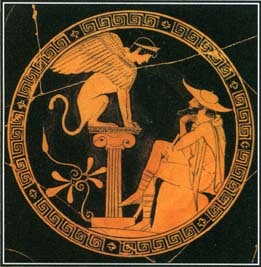
indovinello della sfinge, che rappresentano ovviamente un momento inziatico nella
vita di Edipo. Che poi non era un granché difficile.
Art and poetry
I often
hear contemporary artist that, in order to explain the ridde of contemporary
art to the laymen, liken their work to music. Music doesn’t represents things (with
a few exception such as “Le Quattro Stagioni” by Vivaldi), and yet it conveys
emotions. But I think that this likening is somewhat ill conceived.
Contemproary art does represents
things – actually, it imitates things so well that it usually present the thing
that should be represented itself! Kounelli’s horses is so good an imitation of 12 horses that the horses … are
actual horses in a staple! Morevoer, the feelings that arise from a piece of
art are probably more mental than the very direct emotions raisen by music.
Bach is very mathematical, and yet it is full of passion; the deep pleasure I
feel when I look a performance of Rikriit Tirvanja is almost completely
intellectual. This intellectual side of art is not new to contemporary art:
Mona Lisa is nice to contemplate, but becomes terribly involving only after
understanding.
In my
opinion, a better likening would be with poetry. Poetry is basically grounded
in metaphor, and it seems to me that the same can be said of contemporary art.
When Damien Hirst arranges hundreds of pills on glass shelves he makes a
metaphor; when Jeff Koons puts his electric hoovers on a pedestal he is doing
an hyperbole (another rhetoric figure). Metaphor ethymologically means
transport, and Duchamp’s ready made are “transported” from their original
context into a new environemt. Art of the first half of the XXth century is
still mimetic, although it is the mimesis of the not representable (Kandinskyj
tries to represent spiritual entities, Malevic the fourth dimension), art of
the second half of the XXth century is metaphoric. It is perhaps a coincidence,
but many – well informed and by no way conservative – don’t like it and found it
… rhetorhic, giving unjustly the fault to the market of art.
Metaphor is
a short circuit, that flashes reality and illuminates – hopefully – the hidden
meanings of things. The subject of classical art is truth, the subject of poetry and contemporary art are experience. The difference is not big, but important.

lunedì 6 maggio 2013
History of art
Philippe Daverio, the art.., says that the traditional classification into periods dates to XIX century, when modern art was Raphael and contemporary art was Hayek, and that it has do be deeply rethinked. To my knowledge, he has not put down explicitly a new periodization, but, from sparse hints, it seems to be 1300-1700 (From van Eyck and Giotto to Poussin), 1800-about 1920 (from Ingres and David to Picasso, Kandinskij and the other historical vanguards), and 1920-today (from Duchamp onwards). If I don’t mistake the ideas of Daverio, it seems very sensible. The art of XX century, in fact, is very different before and after World War II, and Picasso and Hirst have probably very little in common.
This periodization of the history of art suggests a parallel segmentation of the history of Man. The end of the Midle Age is traditionally dated at the end of XV century, after the discovery of Americas by Columbus France Italy Italy and in part in the Flandres, and then spreads slowly to Europe , attaining a turning point with the rise of national states and the beginning of colonialism. And it ends in the XX century, with the rise of mass society – this is the surprising idea of Daverio. This pre-dated passage from modernity to post-modernity is related to the astounding rush of technological innovations, the expansion of the middle classes, World War I, the end of colonialism, and Russian Revolution.
venerdì 26 ottobre 2012
Warhol's postmodernism

Postmodernism is usually dated at the 80’s. But I tjink that the actually it begins with Warhol’s Campbell

sabato 18 agosto 2012
Yes-No
A joke, and I don't know if Raetz cites the cover of Hofstadter's Gödel Escher Bach (that was perhaps better devised).

Anyway, a funny joke.
Iscriviti a:
Post (Atom)